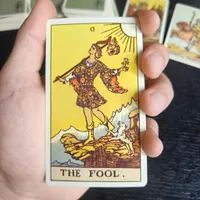

The short answer: to read tarot cards, (1) choose a deck (a Rider–Waite–Smith-style deck is easiest to learn), (2) get to know the 78 cards, (3) settle your space and cleanse the deck if you like, (4) write an open question, (5) shuffle and cut while focusing on it, (6) choose a spread, (7) lay the cards, then (8) interpret each card through its imagery, position, suit and number, and (9) read the cards together as a story. Start with one card a day and three-card spreads; most people feel confident within a few weeks of daily practice.
| Step | What to do | Beginner tip |
|---|---|---|
| 1. Choose a deck | Pick a deck whose art speaks to you | Rider–Waite–Smith-style decks have scenes on every card |
| 2. Learn the structure | 22 Major Arcana + 56 Minor in 4 suits | Learn suits and numbers before memorising 78 meanings |
| 3. Prepare | Quiet space; optional cleansing ritual | Consistency matters more than method |
| 4. Ask | Write an open question | ”What do I need to know about…?“ |
| 5. Shuffle | Any method; cut the deck | Stop when it feels right |
| 6. Choose a spread | 1, 3 or 10 cards | Start with one or three |
| 7. Lay the cards | Face down, then turn them over | Decide on reversals beforehand |
| 8. Interpret each card | Imagery, position, suit, number | Note your first impression |
| 9. Read the story | Connect the cards | Summarise in one sentence |
Step 1: Choose Your First Deck
The Rider–Waite–Smith deck (1909) and the many decks based on it are the easiest to learn from, because every card, including the numbered Minor Arcana, shows a full scene you can read. Most books, apps and online guides use its imagery.
Beyond that, choose a deck whose art you love: you’ll be looking at it a lot. The old belief that your first deck must be a gift is a lovely tradition, not a rule. If you’re drawn to simpler, message-based cards, see tarot vs oracle cards.
Step 2: Get to Know the 78 Cards
You don’t need to memorise 78 meanings before your first reading. Learn the structure and you can work out most cards:
The Major Arcana (22 cards) are life themes and turning points: The Fool (new beginnings), The Lovers (choice and union), Death (transformation), The Tower (sudden change), The Star (hope), The World (completion).
The four suits tell you the area of life:
| Suit | Element | Area of life |
|---|---|---|
| Cups | Water | Emotions, love, relationships, intuition |
| Pentacles | Earth | Money, work, home, health, the material world |
| Swords | Air | Thoughts, communication, decisions, conflict |
| Wands | Fire | Energy, passion, ambition, creativity |
The numbers tell you the stage of the story:
| Number | Meaning |
|---|---|
| Ace | New beginning, seed, opportunity |
| Two | Choice, balance, partnership |
| Three | Growth, creativity, collaboration |
| Four | Stability, rest, structure |
| Five | Challenge, conflict, change |
| Six | Harmony, recovery, generosity |
| Seven | Reflection, assessment, perseverance |
| Eight | Movement, mastery, progress |
| Nine | Near completion, fulfilment |
| Ten | Completion, the end of a cycle |
Court cards (Page, Knight, Queen, King) often represent people, or aspects of yourself, from the eager learner (Page) to the mature master (King).
Combine them: the Three of Cups is growth in emotions: celebration and friendship. The Five of Pentacles is challenge in material life: financial worry or feeling left out. Full card-by-card guide: tarot card meanings for beginners.
Step 3: Prepare Your Space (and Cleanse Your Deck if You Like)
Find a quiet moment and a clear surface. Many readers like a ritual: lighting a candle, taking three slow breaths, or using a cloth to lay cards on.
Cleansing a deck is optional and personal. Popular methods:
- Knocking on the deck three times
- Putting the cards in order, from The Fool to the King of Wands
- Leaving the deck in moonlight, especially at a full moon
- Placing a crystal such as clear quartz on the deck
- Passing it through incense or herb smoke
Do whichever feels meaningful. Many readers cleanse a new deck, after an intense reading, or when the cards feel “off”.
Step 4: Ask a Good Question
The question shapes the reading. Open questions give richer answers than yes-or-no:
| Instead of… | Ask… |
|---|---|
| ”Will he come back?" | "What do I need to know about my relationship with him?" |
| "Will I get the job?" | "What will help me most in this job search?" |
| "Is something bad going to happen?" | "What should I focus on this month?” |
Write your question down. It keeps you focused and makes your journal more useful later.
Step 5: Shuffle and Cut
There’s no wrong way to shuffle. Common methods:
- Overhand shuffle: gentle and easy on the cards.
- Riffle shuffle: fast, though harder on the card edges.
- Washing: spread the cards face down and swirl them around (also creates reversals naturally).
Shuffle while thinking about your question and stop when it feels right. Many readers then cut the deck into three piles with the left hand and restack them.
Step 6: Choose a Spread
| Spread | Cards | Use it for |
|---|---|---|
| Daily card | 1 | Guidance for the day; learning the cards |
| Past – Present – Future | 3 | A general view of a situation |
| Situation – Action – Outcome | 3 | Solving a problem |
| You – Them – Relationship | 3 | Love questions |
| Celtic Cross | 10 | The full picture of a complex situation |
Full guides: three-card tarot spreads, the Celtic Cross and love tarot spreads.
Step 7: Lay Out the Cards
Draw from the top of the deck (or fan the cards and pick by feel) and lay them face down in the spread’s positions. Turn them over one at a time.
Reversals (upside-down cards) are optional. If you use them, decide before you shuffle. Common ways to read them: the card’s energy is blocked or delayed, internal rather than external, or appearing in a weaker or excessive form. Many beginners skip reversals at first and add them later.
Step 8: Interpret Each Card
Read each card in four layers:
- First impression. What do you notice first? What do you feel? Write it down before reaching for a book.
- Imagery. What’s happening in the scene? Who’s in it? What are they doing, and where are they looking?
- Position. What does the spread position ask? The Tower as “past” is an upheaval you’ve come through; as “near future”, a sudden change on the way.
- Suit and number. Use the tables above to confirm the area of life and stage.
Step 9: Read the Cards as a Story
This is where tarot comes alive. Look at the cards together:
- How does each card lead to the next?
- How many Major Arcana? Two or more in three cards suggests a significant moment.
- Which suit dominates? That’s the area of life the question really lives in.
- Do any figures face each other or away from each other?
- Repeated numbers? Two Fives, for example, suggest a shared stage of challenge and change.
Finish by summarising the reading in one sentence. If you can’t, draw one clarifying card.
A 30-Day Tarot Practice Plan
| Week | Daily practice |
|---|---|
| Week 1 | Draw one card each morning; write your first impression, then read its meaning. In the evening, note how it showed up. |
| Week 2 | Focus on suits: notice which suits keep appearing and what’s happening in that area of your life. |
| Week 3 | Do a three-card Past – Present – Future spread every other day. |
| Week 4 | Try reversals, read for a friend, and attempt one Celtic Cross. |
Keep a tarot journal throughout: date, question, cards, interpretation, and what actually happened. It’s the fastest way to learn.
Reading for Other People
- Ask them to shuffle or cut the deck if you’re together.
- Let them ask the question in their own words.
- Share what you see kindly and constructively, focusing on choices and guidance.
- Leave sensitive topics like health, legal and financial decisions to qualified professionals.
Beginner Mistakes to Skip
- Memorising before reading: start reading on day one with the structure tables.
- Asking the same question repeatedly: draw once, reflect, and return in a few days.
- Fearing “scary” cards: Death and The Tower usually mean transformation and change, not literal disaster.
- Ignoring your intuition: your first impression is part of the reading.
- Reading only for yourself when anxious: it’s hard to be neutral about your own heart.
When to Ask Another Reader
Reading for yourself is rewarding, but when you care deeply about the answer it’s hard to stay neutral. That’s when many readers, even experienced ones, book a reading from someone else. A focused three-card reading fits into a short online session, and welcome offers (3 free minutes on Kasamba, a $30 credit on Purple Garden, 5 minutes for $1 on Keen) make it inexpensive (free tarot reading online). Tarot readers we’ve reviewed who are great for beginners:
- Andi (Kasamba, $2.99/min chat): American Tarot Association member; brisk, clear readings.
- Dennis M (Purple Garden, $4.49/min): grounded, growth-oriented tarot; listed among Purple Garden’s “Voted Most Accurate”.
- Krys Britton (Keen, $2.25/min): concrete, actionable answers with oracle cards.
More: best online tarot reading sites.
Frequently Asked Questions
How do beginners read tarot cards?
Start with a Rider–Waite–Smith-style deck, learn the suits and numbers rather than all 78 meanings, ask an open question, and use one-card or three-card spreads. Read each card through its imagery, position, suit and number, then connect the cards into a story.
How long does it take to learn tarot?
Most people can do simple readings within a few weeks of daily practice. Learning all 78 cards deeply and reading complex spreads like the Celtic Cross often takes several months.
Do you have to be psychic to read tarot?
No. Tarot is a skill anyone can learn through the cards’ symbolism and structure. Intuition grows with practice, and many readers find it becomes a natural part of their readings.
Should beginners use reversed tarot cards?
It’s optional. Many beginners start without reversals and add them once they know the upright meanings. If you use them, decide before you shuffle.
How do you cleanse tarot cards?
Popular methods include knocking on the deck, putting the cards back in order, leaving them in moonlight, placing a crystal on them, or passing them through incense smoke. Choose whatever feels meaningful to you.
What is the best tarot spread for beginners?
A daily one-card draw for learning, and the three-card Past – Present – Future spread for questions. Move on to the Celtic Cross when you’re comfortable.
Related Guides
- Tarot card meanings for beginners
- Three-card tarot spreads
- Celtic Cross tarot spread
- Tarot vs oracle cards
- Yes or no tarot cheat sheet
- Free tarot reading online
How to get a tarot reading by phone in 2026: what a telephone tarot reading costs (phone-rate medians of $7.99/min on Kasamba, $5.99 on Purple Garden and $6.26 on Keen across 191 audited tarot readers), why Keen is the cheapest place to call, five tarot readers whose call rate is the same as or lower than their chat rate (from $2.25/min), what a 10, 20 or 30-minute first call costs with welcome offers, and how to prepare so the cards answer your question.
Read the guide →Still weighing it up? The fastest way to know if a reading clicks is to try one — 3 free minutes + 50% off for new clients.
Free to join · 3 free minutes on your first reading · No subscription
Ready to get your reading?
Pick the one that fits your question — every link is an independent recommendation.
3 free minutes + 50% off
Permanent chat transcripts & 3 free minutes on your first reading — safest for testing relationship specialists.
Claim 3 Free Min + 50% Off →Claim 3 Free Min →
$30 free credit
Mandatory video intros & a public outcomes ledger. The most accessible entry price.
Claim $30 Credit →Claim $30 Credit →
5 free minutes
Your first 5 minutes are credited back after the first reading, and a disappointing session can earn up to 10 minutes back.
Claim 5 Free Min →Claim 5 Free Min →Eastern Alignment is reader-supported. If you sign up through a link, we may earn a commission — at no extra cost to you. This never influences my ratings.