The short answer. No reading can reliably tell you when someone will die, fall ill or meet with disaster, and many experienced readers refuse to make these predictions for exactly that reason. A frightening prediction usually reflects poor judgement, a too-literal reading of a symbolic card, or a deliberate set-up for a paid “protection” or “cleansing” offer. Don’t pay for anything to prevent it. Write down exactly what was said, talk to someone you trust, and if it concerns your health, use it at most as a reason for an ordinary check-up, never as a diagnosis. If the fear won’t leave you, that is worth getting support for in its own right.
Being told something terrible is coming is one of the worst things that can happen in a reading. People describe hearing that a parent will die within the year, that they’ll have an accident, that a pregnancy won’t last, that they’re carrying an illness, or that “dark times” are ahead. The words stick. They replay at night.
This guide is here to help you steady yourself. It doesn’t ask you to stop believing in readings. It explains why these predictions are unreliable, why some readers make them anyway, what frightening cards and charts actually mean, and what to do over the next few days.
First, Breathe: What This Prediction Is (and Isn’t)
Three facts to hold onto:
- A prediction is not a fact. Even readers who believe deeply in their abilities describe what they see as possibilities and influences, not fixed outcomes. Our guide to predictions that don’t come true explains why timelines in particular are unreliable.
- Responsible readers avoid this territory. Many working readers publish personal codes of ethics saying they won’t predict death, diagnose illness or forecast disasters, because they can’t know, because of the harm it causes, and because they aren’t medical professionals. A reader who crossed that line made a choice many of their peers would not.
- You can’t be cursed into a bad outcome by hearing about it. But fear can affect how you feel and behave, which is why the rest of this guide focuses on putting it in proportion.
Why Some Readers Predict Bad Things
There are three broad reasons, and they call for different responses.
1. A literal reading of symbolic imagery
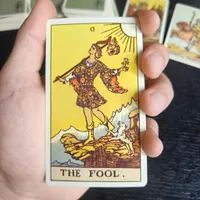
Tarot, astrology and other systems are full of dramatic symbols: Death, the Tower, eclipses, Saturn, swords through a body. Most traditions read these as symbols of change, pressure or endings, not literal events. An inexperienced or careless reader may present the symbol as a prediction.
2. Projection and poor judgement
Readers are human. A reader’s own fears, or a desire to seem powerful, can surface as a dramatic prediction. This is unhelpful but not necessarily malicious.
3. Fear as a sales tactic
This is the pattern to watch for. A reader announces danger, illness, a curse or bad luck, then offers to remove or protect against it for a fee: candles, prayers, cleansing, “work”, talismans. Documented fraud cases in the US follow exactly this shape, often escalating to very large sums. Our guide to what to do if a psychic says you’re cursed walks through the five-stage script and real court cases.
The tell: if the frightening prediction comes with a price for the solution, a deadline, or a request to keep it secret, it isn’t guidance. It’s a pitch.
Frightening Phrases and What They Usually Mean
Many frightening readings use a small set of phrases. Seeing them side by side takes some of their power away.
| What you heard | What it usually is |
|---|---|
| ”I see dark energy around you.” | A vague statement that fits anyone going through a hard time, and a common opening for a paid cleansing offer |
| ”Someone is jealous of you / has put something on you.” | Unverifiable, and the classic set-up for curse removal |
| ”I see a funeral / a hospital.” | A dramatic image that may stand for an ending or a period of recovery, or may simply be a guess |
| ”Something big is coming in the next 30 days.” | Urgency without content; most months contain something significant |
| ”You have a block.” | A label for frustration, often followed by a price to “clear” it |
| ”Your relationship is doomed.” | An opinion presented as fate; relationships change with what people do |
| ”Don’t tell anyone what I’ve told you.” | Isolation. The single clearest sign the reading is not in your interest |
Questions to Ask Yourself About the Prediction
Once the first shock has passed, these questions help you judge what you were told:
- Was it specific? A name, a date and a cause, or a general sense of trouble?
- Did it come with an offer? Protection, cleansing, prayers, more sessions?
- Was I asked to keep it secret?
- Did the reader know things they could have guessed? Your age, your situation, what you’d already told them.
- What would I do differently if I’d never heard it? If the answer is “nothing”, you can let it go.
- Is there an ordinary, sensible action hidden in it? A check-up, a phone call, more care on the road. Take that, and leave the rest.
- How did the rest of the reading go? If much of it was vague or wrong, this part is unlikely to be the one thing that was right.
- How do I feel when I imagine putting it down? Relief is a sign it was never yours to carry.
What Frightening Cards Actually Mean
If your reading was a tarot reading, the card that frightened you may mean something quite different from what you heard. These are the common meanings in the widely used Rider-Waite-Smith tradition.
| Card | Common fear | Usual meaning in readings |
|---|---|---|
| Death | Someone will die | Endings and transformation: one chapter closing so another can start. The card shows a rising sun, a symbol of renewal |
| The Tower | Disaster, accident | Sudden change or revelation that breaks down something unstable; often clears the way for something more honest |
| Ten of Swords | Betrayal, violent end | The painful bottom of a situation, with the implication that it can’t get worse and recovery follows |
| Three of Swords | Heartbreak, loss | Grief or emotional pain, often something already happening, and the need to let it be felt |
| Five of Pentacles | Poverty, illness | Hardship or feeling left out in the cold, with help nearby if you look for it |
| Nine of Swords | Something terrible coming | Anxiety, sleeplessness and worry; often read as fear being worse than reality |
| The Devil | Evil, a curse | Feeling trapped by a habit, relationship or pattern, with the chains loose enough to remove |
The same principle applies to astrology. Saturn returns, eclipses and difficult transits are generally read as periods of pressure or change, not as predictions of death or catastrophe. Our beginner’s guide to tarot card meanings covers the full deck.
How Fear Can Affect You (and How to Interrupt It)
You can’t make an accident happen by worrying about it. But expectations can shape how you feel and what you do, and that’s worth understanding.
- The nocebo effect. In medicine, negative expectations can increase unpleasant symptoms. A review in the New England Journal of Medicine describes nocebo effects as the harmful results of negative expectations, seen across many clinical settings (Colloca and Barsky, 2020). After a frightening reading, ordinary aches can feel ominous, and anxiety itself causes real physical symptoms.
- The self-fulfilling prophecy. Sociologist Robert Merton described how a false belief can change behaviour in ways that make it come true (Merton, 1948). Someone told their relationship is doomed may withdraw, test or accuse, and help bring about the ending they feared.
- Selective attention. Once you’ve been told to expect trouble, you notice every bit of bad luck and overlook the rest.
None of this means you’re imagining your fear. It means the fear itself deserves attention, separate from whether the prediction is true.
Why a bad prediction sticks more than a good one
If you’ve had dozens of encouraging readings and one frightening one, you may notice that the frightening one is the only one you think about. That is normal. Psychologists Roy Baumeister and colleagues reviewed a large body of research and concluded that “bad is stronger than good”: negative events, feedback and information have a larger and longer-lasting effect on people than positive ones of the same size (Baumeister et al., 2001).
That’s useful to know for two reasons. It explains why the prediction feels so loud, and it reminds you that the loudness says nothing about whether it’s true.
What to Do Over the Next Few Days
Today
- Write it down, word for word. Exactly what was said, by whom, when, and in what format. Memory exaggerates frightening statements; the written version is often vaguer than you remember.
- Notice what was and wasn’t specific. “Someone close to you will face a health challenge” applies to nearly everyone. A specific name, date and cause is rare, and still not knowledge.
- Pay for nothing. No protection, cleansing, prayers or follow-up “to find out more”.
- Tell someone you trust. Saying it out loud usually shrinks it.
This week
- Separate what you can control from what you can’t. Make two columns. In the first, put ordinary actions that would be good for you anyway: a check-up you’ve been putting off, driving carefully, calling a relative you’ve been meaning to call. In the second, put everything else. Act on the first column. Let the second column be.
- Don’t go looking for a second opinion on the same fear. It’s tempting to book more readings to cancel out the first. In practice, repeated readings on a frightening question tend to keep the fear alive. If you want another reading, ask about something you can act on.
- Limit late-night searching. Searching symptoms or “what does the Tower mean death” at 2 a.m. feeds the loop.
- Do something grounding every day: a walk, exercise, time outside, cooking, time with people.
After two weeks
- Check in with yourself. If the fear has faded, good. If it is affecting your sleep, appetite, work or relationships, talk to a doctor or therapist. Persistent fear after a reading is a recognised form of anxiety, and it responds well to help.
Specific Situations
A prediction about your own health
- Readers aren’t doctors and shouldn’t diagnose. Treat a health prediction as, at most, a prompt for ordinary care.
- If you have symptoms, see a doctor, and tell them you’re anxious. That helps them reassure you properly.
- If you have no symptoms, a routine check-up you’d have had anyway can settle the worry. Avoid repeated tests driven only by the reading.
- Never stop, start or change medical treatment because of a reading.
A prediction about someone else’s death or accident
- You can’t act on it in a meaningful way, and telling the person usually passes the fear on without helping them.
- If it makes you want to spend more time with someone, or say something you’ve been meaning to say, that’s a positive thing to do regardless of any prediction.
A prediction about pregnancy or a baby
- Predictions of miscarriage, complications or infertility are especially painful and especially unreliable. Many readers won’t touch these questions at all.
- Bring any medical concern to your midwife, obstetrician or doctor, who can give you real information.
- If you have experienced pregnancy loss, our guide to pregnancy readings discusses what readings can and can’t offer.
A prediction of disaster, war or financial ruin
- Predictions of large-scale events have a long record of not happening on schedule. Ordinary sensible preparation, like an emergency fund or insurance, is good for anyone; panic decisions such as selling everything are not.
A prediction made to a child or teenager
- Reassure them calmly that no one can know these things, and that a reader shouldn’t have said it. Keep the conversation open, and watch for ongoing worry or nightmares.
If You Want to Go Back to the Reader
You don’t have to, and you shouldn’t pay for more time to “find out more”. But if you booked through a platform and want clarity, these questions are fair to ask in writing:
- “When you said [exact words], did you mean that literally, or as a symbol of change?”
- “What did you see that led you to say it?”
- “What, if anything, do you suggest I do?”
A responsible reader will soften, clarify, or acknowledge they overstated it. A reader who doubles down and attaches a fee to the solution has told you what you need to know. Either way, save the messages.
Relationship “bad news”
Some of the most common frightening predictions are about relationships: a partner is cheating, a marriage will end, someone will leave. These can do real damage if you act on them. Before you confront anyone, remember that a reading is not evidence. Look at what is actually happening in the relationship, talk to your partner about real concerns in your own words, and consider a counsellor if trust is shaky. Our guide to suspecting a third party covers this situation in more depth.
What a Responsible Reader Does With Difficult Material
Readers sometimes do pick up on difficulty, and a good reading can include hard things. The difference lies in how they handle it:
| Responsible reader | Fear-based reader |
|---|---|
| Describes a difficult period in general, symbolic terms | Names a death, illness or disaster as a fact |
| Focuses on what you can do and how to look after yourself | Focuses on what will happen to you |
| Suggests real-world help: a doctor, a counsellor, support | Suggests paid protection, cleansing or more readings |
| Leaves you calmer and more able to act | Leaves you frightened and dependent |
| No new fee, no deadline, no secrecy | A price, a deadline and “don’t tell anyone” |
If you’re choosing a reader in future, reviews that describe someone as honest but kind, or direct but grounded, are a good sign. Our guide to how to tell if an online psychic is legitimate lists more warning signs, and our Kasamba review explains how one platform lets you read advisor reviews and report a reader.
Should You Report the Reader?
- On a platform: yes, especially if the prediction came with an offer of paid protection or caused you real distress. Platforms can review chat transcripts and act on fear-based selling.
- Off a platform, with money involved: if you paid for protection or removal, treat it as possible fraud. The steps are in how to get money back after a psychic scam.
- Leaving a review: a factual review (“the reader predicted my mother’s death and offered prayers for $200”) warns others.
When to Get Support
- If you can’t stop thinking about the prediction after a couple of weeks.
- If you’re avoiding normal life (driving, travel, seeing people) because of it.
- If you’re having panic attacks, can’t sleep, or feel hopeless.
- If you keep booking readings to check whether the danger has passed (our guide to compulsive reading use can help).
A doctor or therapist can help, and you don’t need to explain or defend the reading to get that help. If you feel unsafe or unable to cope, call or text 988 in the US, call Samaritans on 116 123 in the UK and Ireland, or contact local emergency services.
Helping Someone Else Who Got a Frightening Reading
If a friend or relative is shaken by a prediction:
- Listen first. Let them tell you exactly what was said before you respond.
- Don’t mock the reading or them. “That’s ridiculous” makes people defend the reader. “That sounds frightening, no wonder you’re shaken” opens the door.
- Point out what’s missing. No reader can know dates of death or diagnoses, and good readers don’t try.
- Check for an offer. Ask gently whether they were offered protection, cleansing or more sessions. If so, help them see the pattern, and make sure they don’t pay.
- Do something ordinary together. A walk, a meal, a check-up appointment if they want one. Normal life is the best counterweight to a dramatic prediction.
- Stay in touch over the following weeks, especially if the date or event mentioned is approaching.
FAQs
A psychic told me someone will die. Should I believe it?
No reading can reliably predict when anyone will die, and many experienced readers refuse to make death predictions for exactly that reason. If the prediction was followed by an offer of paid protection, cleansing or prayers, treat it as a sales tactic. Write down exactly what was said, talk to someone you trust, and do not pay for anything to prevent it.
Does the Death card mean someone will die?
Almost never. In the widely used Rider-Waite-Smith tradition, the Death card symbolises endings and transformation: one chapter closing so another can begin. The image includes a rising sun, a symbol of renewal. Most readers do not read it as literal death.
A psychic said I will get sick. What should I do?
Use it, if anything, as a nudge to look after your health in ordinary ways, not as a diagnosis. If you have symptoms, or the worry persists, book a routine appointment with your doctor and tell them you are anxious. Never stop or change medical treatment because of a reading.
Can a negative prediction come true just because I believe it?
Belief cannot make a random event happen, but expectations can change how you feel and act. Research on the nocebo effect shows negative expectations can increase symptoms such as pain and anxiety, and a false belief can change behaviour in ways that make it come true. That is why it helps to put a frightening prediction in perspective.
Why would a psychic predict something bad?
Sometimes it is poor judgement or a too-literal reading of symbolic cards. Sometimes it is a deliberate tactic: frightening news followed by an offer to remove a curse or provide protection for a fee. A responsible reader who sees something difficult frames it gently, focuses on what you can do, and never attaches a new fee to it.
What should I do if a scary prediction keeps going round in my head?
Write it down word for word, then write what you can actually do about it. Talk it through with someone you trust and avoid more readings on the same question. If the fear affects sleep, work or relationships for more than a couple of weeks, speak to a doctor or therapist.
Sources
- Colloca, L. and Barsky, A. J. (2020). Placebo and nocebo effects. New England Journal of Medicine, 382, 554–561. doi:10.1056/NEJMra1907805
- Merton, R. K. (1948). The self-fulfilling prophecy. The Antioch Review, 8(2), 193–210.
- Baumeister, R. F., Bratslavsky, E., Finkenauer, C. and Vohs, K. D. (2001). Bad is stronger than good. Review of General Psychology, 5(4), 323–370. doi:10.1037/1089-2680.5.4.323
- Waite, A. E. (1910). The Pictorial Key to the Tarot. (Descriptions of the Rider-Waite-Smith cards.) sacred-texts.com
- US Department of Justice (2016). Justice Department permanently shuts down international psychic mail fraud scheme. justice.gov
- Associated Press via Fox News (2013). NYC psychic gets prison in 6-figure scam case (“negative energy” removal). foxnews.com
A psychic or tarot reader you follow suddenly messages you with an urgent reading? It is almost certainly a clone. This guide explains how social media impersonation scams work (cloned accounts, 'I read your name and felt a connection' DMs, YouTube comment replies that push you to WhatsApp or Telegram), a 60-second verification checklist, what to do if you've replied or paid, how to report on each platform, and how to enjoy pick-a-card and live readings safely.
Read the guide →